
The Obesity Crisis: Are We Running Out of Time?
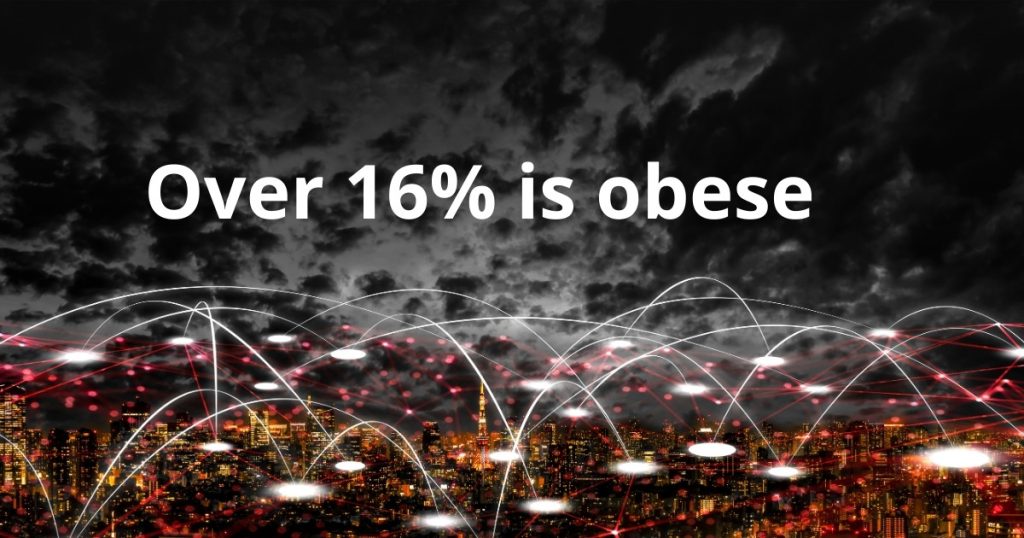
Obesity Crisis: When did we stop noticing? When did it become normal to see entire families struggling with weight, children developing diseases that once belonged only to their grandparents, and entire communities trapped in a cycle they never asked to be part of?

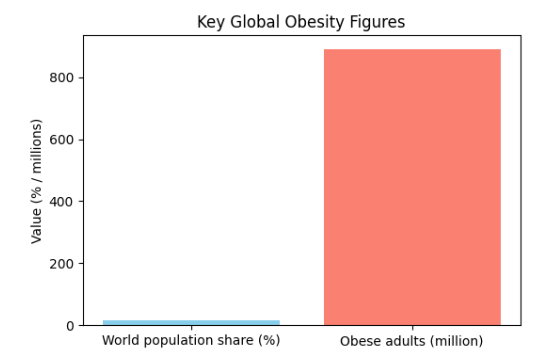
The numbers don’t lie, but they do terrify. As of 2022, 890 million adults worldwide are obese that’s 16% of every adult you see on the street, in your office, at your child’s school (World Health Organization, 2024). But here’s what should shake you awake at night: this number has more than doubled since 1990. Among children and adolescents? It has quadrupled (World Health Organization, 2024).
Let me ask you something personal: When you look in the mirror, do you see the version of yourself you thought you’d be at this age?
The Death Toll No One Wants to Talk About
Here’s a truth that might make you uncomfortable: obesity-related complications kill at least 2.8 million people every year (World Health Organization, 2021). That’s not a statistic that’s someone’s mother, father, sister, brother. That’s someone who had dreams, plans, people who loved them.
Type 2 diabetes? Forty-four percent of cases are directly linked to excess weight. Heart disease? Twenty-three percent. And cancer the word we all whisper between 7% and 41% of cases depending on the type, all traceable back to the extra pounds we carry (World Health Organization, 2021). In fact, obesity is now recognized as the fifth leading cause of death globally.
But here’s what terrifies me most: According to the OECD, obesity and its associated diseases will reduce global life expectancy by 0.9 to 4.2 years over the next three decades an average of 2.7 years stolen from every person’s future (Organisation for Economic Co-operation and Development, 2019).
Stop for a moment. Think about 2.7 years. That’s 987 days. That’s holidays you won’t celebrate, grandchildren you won’t meet, sunsets you won’t see. Is that acceptable to you?
When Did This Become Our Normal?
In France, the transformation has been staggering. In 1997, just 8.5% of adults were obese. By 2024? That number jumped to 17.9% more than doubled in just 27 years (Ligue contre l’obésité, 2024). In the United States, the projections are even more chilling: by 2050, more than 80% of adults and nearly 60% of adolescents will be overweight or obese if nothing changes (The Lancet, 2024).
Let that sink in. Four out of five people. Your children. Your neighbors. Maybe you.

Globally, we’re racing toward a cliff: by 2050, more than half of all adults and one-third of children will be overweight or obese (The Lancet, 2024). The World Health Organization predicts that by 2030, more than half of Europe’s population will be obese (World Health Organization, 2022).
Here’s my question for you: If we know this is coming, why aren’t we fighting like our lives depend on it? Because they do.
The Invisible Chains We Wear

You know what breaks my heart? It’s not just the physical toll. It’s the silent suffering that millions endure every single day.Obesity increases your risk of depression by nearly 55% (World Health Organization, 2022). Think about that. You’re not just carrying extra weight on your body you’re carrying the burden of stigma, discrimination, shame, and the slow erosion of your self-worth.
The complications read like a horror story:
- Your heart struggles, leading to hypertension, atherosclerosis, heart attacks, and strokes
- Your pancreas gives up, ushering in type 2 diabetes (80% of people with diabetes are overweight)
- Your body turns against itself, increasing your risk of at least 13 different types of cancer responsible for 200,000 new cancer cases annually in Europe alone (World Health Organization, 2022)
- Your joints wear down, your breathing becomes labored, your sleep is interrupted
- Your kidneys strain, your liver fails, your fertility diminishes
And here’s the cruelest part: The world often blames you for it. As if you chose this. As if you woke up one day and decided to struggle.
But What If It’s Not Your Fault?

The World Health Organization reports that obesity is four times more prevalent in disadvantaged communities (World Health Organization, 2022). Four times. This isn’t about willpower or laziness it’s about an environment designed to make us sick.
We live in what researchers call an “obesogenic environment” a world where:
- Healthy food is expensive and hard to access
- Ultra-processed foods engineered to be addictive are everywhere and cheap
- Our cities are built for cars, not for walking
- We work sedentary jobs staring at screens
- Food marketing targets our children with surgical precision
- Stress is constant, sleep is elusive, and time is a luxury
Add to this the genetic factors with heritability estimated at 70% and prenatal factors like maternal smoking, diabetes, or socioeconomic disadvantage, and you start to see the truth (Inserm, 2019): this is a systemic crisis, not a personal failing.
A Glimmer of Hope in the Darkness
Here’s where the story starts to shift. New research is changing everything we thought we knew about obesity.
In 2024, a commission of 56 global experts published groundbreaking findings in The Lancet, arguing that we need to completely redefine obesity (The Lancet Diabetes & Endocrinology Commission, 2024). It’s not just about BMI anymore it’s about understanding the complex physiology, the psychological impact, and the devastating effects of stigma.
And then there are the medications. The GLP-1 receptor agonists drugs like Wegovy, Ozempic, and Mounjaro represent what some are calling the most significant medical advancement in obesity treatment we’ve ever seen (Inserm, 2024). They’re not magic pills, but they’re giving people hope when they had none.
Current research is even exploring ways to preserve lean muscle mass during weight loss, addressing one of the biggest challenges in maintaining results long-term (Inserm, 2024).
But here’s the reality check: Even with these breakthroughs, no pill can fix a broken food system. No injection can redesign our cities. No medication can undo decades of stigma and shame.
The Economic Nightmare We Can’t Ignore
By 2030, the global costs of overweight and obesity will reach $3 trillion annually. By 2060? Over $18 trillion (World Health Organization, 2024).
That’s not just money. That’s healthcare systems collapsing. That’s families driven into poverty by medical bills. That’s economies straining under the weight of preventable disease.
But forget the numbers for a second. What’s the cost of a parent who can’t play with their kids because they can’t breathe? What’s the cost of someone who avoids family photos because they’re ashamed? What’s the cost of a life not fully lived?
The Question You Need to Answer

We’re standing at a crossroads. The projections are clear, the science is settled, and the clock is ticking. By 2050, we could be living in a world where being overweight is the norm, where children are sicker than their parents, and where we’ve normalized a crisis that was entirely preventable.
So I’m asking you directly: What are you going to do about it?
Not what should governments do. Not what should corporations do. What are you going to do?
Because here’s the truth that no one wants to say out loud: waiting for the system to change while your health deteriorates isn’t a strategy it’s a surrender.
You can start today. Not tomorrow. Not Monday. Not January 1st. Today.
- You can take a walk.
- You can drink water instead of soda.
- You can cook one meal instead of ordering takeout.
- You can ask for help.
- You can forgive yourself for past failures and choose differently right now.
This isn’t about perfection. It’s about direction. It’s about deciding that you matter, that your health matters, that your future matters.
The statistics say we’re losing this battle. But statistics are made up of individuals making individual choices. You’re not a statistic. You’re a person with agency, with strength you haven’t tapped into yet, with a future that’s still unwritten.
A Final Thought Every single day, 7,671 people die from obesity-related complications. That’s one person every 11 seconds.
How many seconds did it take you to read this article? How many lives just changed forever?
The question isn’t whether the obesity crisis is real. The question is whether you’re going to be part of the solution or part of the statistic.
Your move.
References
Inserm. (2019). Obésité: Prévention et prise en charge de l’épidémie mondiale. Institut National de la Santé et de la Recherche Médicale. https://www.inserm.fr
Inserm. (2024). Obésité: De nouvelles pistes de traitement. Institut National de la Santé et de la Recherche Médicale. https://www.inserm.fr
Ligue contre l’obésité. (2024). ObEpi 2024: 18% des adultes français obèses. https://liguecontrelobesite.org
Organisation for Economic Co-operation and Development. (2019). The heavy burden of obesity: The economics of prevention. OECD Health Policy Studies. https://doi.org/10.1787/67450d67-en
The Lancet. (2024). Global trends in overweight and obesity. https://www.thelancet.com
The Lancet Diabetes & Endocrinology Commission. (2024). Redefining obesity: Beyond BMI. The Lancet Diabetes & Endocrinology. https://www.thelancet.com
World Health Organization. (2021). Obesity and overweight fact sheet. https://www.who.int
World Health Organization. (2022). WHO European regional obesity report 2022. WHO Regional Office for Europe. https://www.who.int
World Health Organization. (2024). World obesity day 2024: Accelerating action to prevent obesity. https://www.who.int